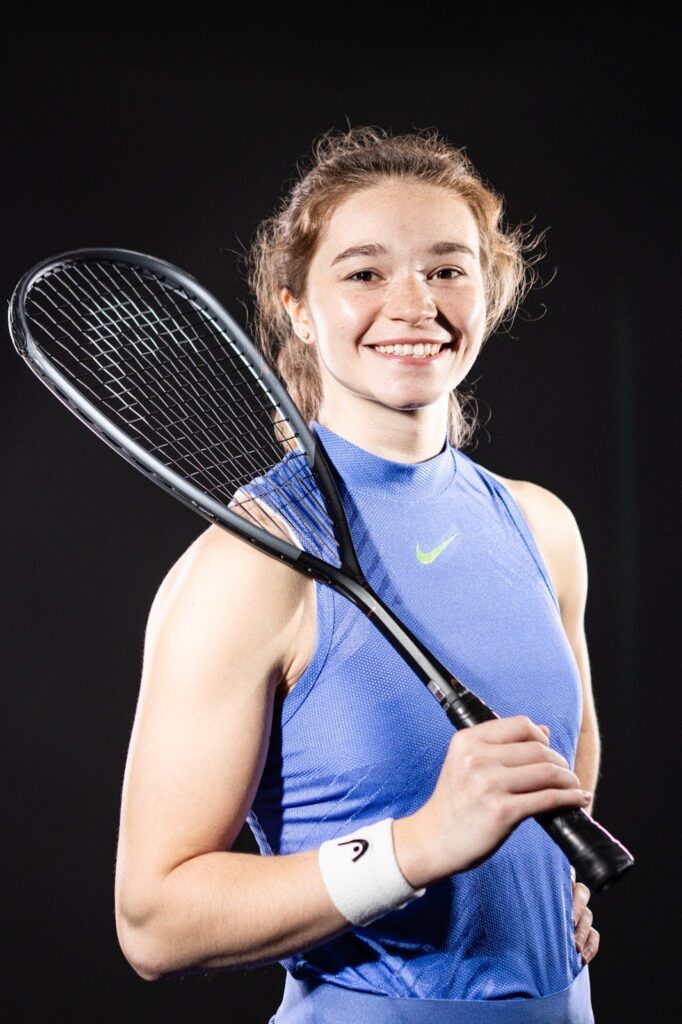
Interview by Tor Gray
Now in her second full season on the professional squash tour, Marina Stefanoni continues to evolve—not just in results, but in how she trains, prepares and approaches competition. With greater demands on court and more time spent on the road, her development has been shaped by learning what it means to train with intention and adapt to life as a touring professional.
In this interview, Marina reflects on her growth over the past two seasons, how her training has shifted as competition has intensified, and why solo drilling remains a foundational part of her preparation. Her insights offer practical takeaways for players at every level looking to train smarter, stay focused and trust their own development.
Over the past two seasons, you’ve climbed steadily up the world rankings, continuing to build momentum on the professional tour. What has it meant to see that progress reflected in your ranking, and how has that upward trajectory influenced the way you approach training, competition and your overall development as a player—both on and off court?
In my first season on the professional squash tour, I rose from No. 61 in the world to a career-high ranking of No. 25. In the first half of my second full-time season, I’ve reached a highest ranking of No. 20. Since graduating college, I’ve been able to fully dedicate myself to training on and off court, so it’s been extremely rewarding to see that commitment reflected in my ranking. It reassures me that I’m on the right path and that the daily work is leading to tangible progress.
As I’ve climbed the rankings, the competition has grown stronger in every aspect—physically, tactically and mentally. That has pushed me to train with more intensity and intention than ever before. I’m spending more hours on court and in the gym than I did last year, but more importantly, I approach every session with a clear focus. There’s no room to take training for granted, so everything I do now has a purpose tied directly to improving my performance on court.
What does your overall training approach look like, especially during a busy stretch of tournaments? How do you balance on-court work, fitness, recovery and mental preparation?
My training approach varies week to week depending on the tournament schedule. I play around 15 professional tournaments a year, so there are many weeks when I’m on the road. During tournaments, on non-match days, I try to hit with other players and train in a more competition-focused way, combining drilling and gameplay.
I tend to do less gym work while traveling, so when I’m home, I prioritize strength training with my coach, Brigit. A typical training day at home usually includes two sessions—either two squash sessions or one squash and one gym session. Some days are heavier, but I always balance them with lighter days to help keep my body healthy and injury-free.
How does having a consistent routine benefit you mentally, not just physically? Does it change how you show up on court when it’s time to compete?
A consistent routine allows my mind to relax during preparation, whether that’s before training or before a match. No matter who I’m playing or where I am, I always try to step on court with high energy. My routine helps me feel ready and confident, but I also think it’s important to stay flexible and adjust when the situation calls for it.
You spend so much time traveling for tournaments. How do you adapt your training when you’re on the road and don’t always have ideal conditions or consistent training partners?
When I’m traveling for tournaments, I usually have one session per day on non-match days. I keep gym work very light and focus more on mobility and quick, explosive movements. On match days, I’ll do a short solo session or drill with another player in the morning to feel sharp without exhausting myself.
Tournaments can actually be a great training environment because I get to hit with players outside my usual training circle. Sometimes I’ll even stay an extra day after a loss to get more training in rather than flying home immediately.
One thing that really stands out in your training is how much solo drilling you do. When did that become a key part of your preparation, and why has it been so important for you?
Solo drilling has been part of my routine since I started playing squash at nine years old. I used to solo with my dad on court, coaching me through the sessions. Now, if I go too long without soloing, my shots don’t feel as smooth.
Some of the best solo drills are the most “boring” ones — straight drives or serves — but they’re essential. Solo drilling helps me feel confident in my shots and allows me to hit the ball far more times than I would in a partnered session. It’s really about getting in the zone and building trust in my game.
What does solo drilling allow you to focus on—technically or mentally—that you don’t always get from match play or partnered sessions?
Solo drilling lets me focus on the smallest technical details of my game. The repetition allows me to feel the difference between old and new techniques and make adjustments more effectively. It also builds patience and mental focus. If you can stay locked in on court by yourself for an extended period, it becomes easier to stay focused throughout an entire match.
Solo drilling is often overlooked outside the professional game. What would you say to players who might hesitate to train on their own?
If you’re a beginner, solo drilling is one of the fastest ways to improve. You’re hitting twice as many shots compared to hitting with a coach or an opponent and repetition is what creates good habits.
Solo drilling can be boring at times, but mixing necessary drills with fun, skill-based challenges can make it more engaging. Developing hand-eye coordination and racket dexterity on your own can translate directly to better performance in matches.
See some of Marina’s solo drilling content here and throughout her Instagram page.
For players juggling busy schedules or struggling to find hitting partners, how can solo drilling change the way they think about making progress in their game?
Life is busy, and not everyone has time for lessons or clinics. A short solo session can still make a big difference. Spending 30 minutes soloing could mean hitting hundreds of repetitions on a single shot — far more than you might get in a group session.
That doesn’t mean clinics and lessons aren’t valuable, but solo drilling is an efficient way to see progress quickly. And seeing progress is motivating.
Looking back, what advice would you give your younger self—or any player—about building confidence through training and trusting the process?
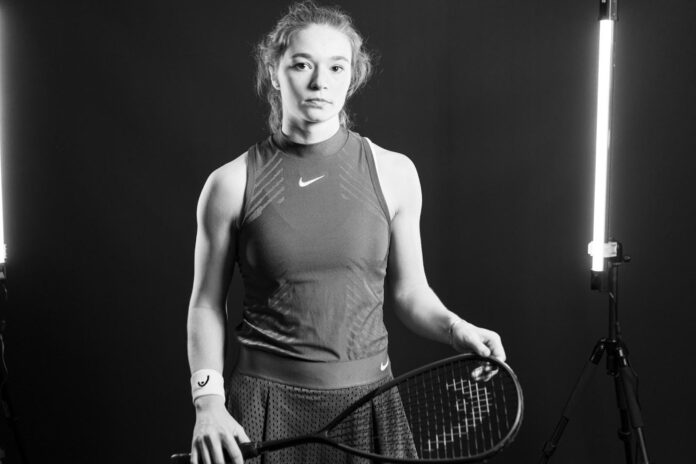
I would tell my younger self—and any player—to be okay with “getting worse.” There will be days when you feel like you’ve made huge progress, and others when it feels like you’ve lost what you just learned. Those ups and downs are a natural part of improvement.
Dropping down doesn’t mean failure—it just means there’s room to climb again. Trusting that process is key to long-term confidence and growth.